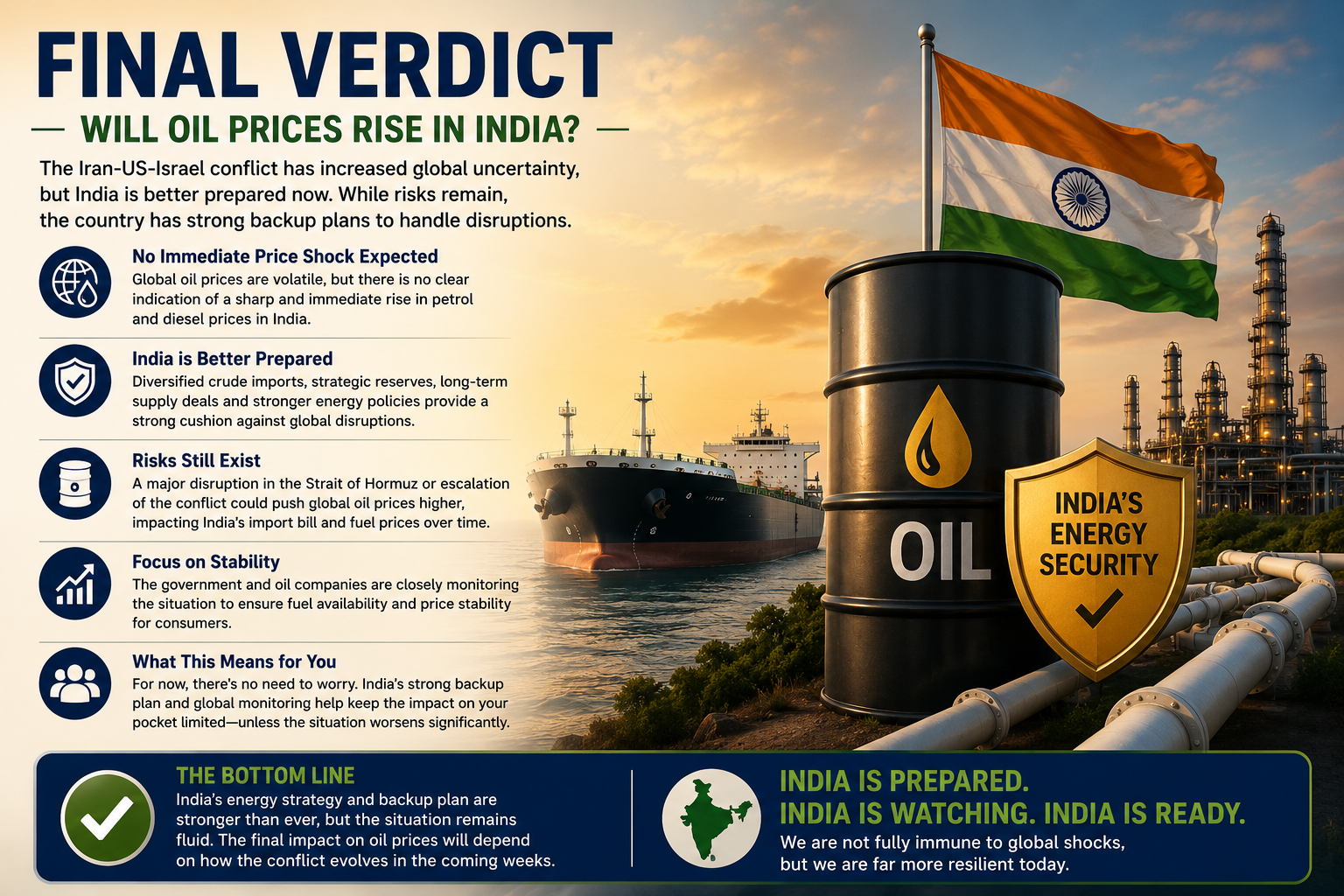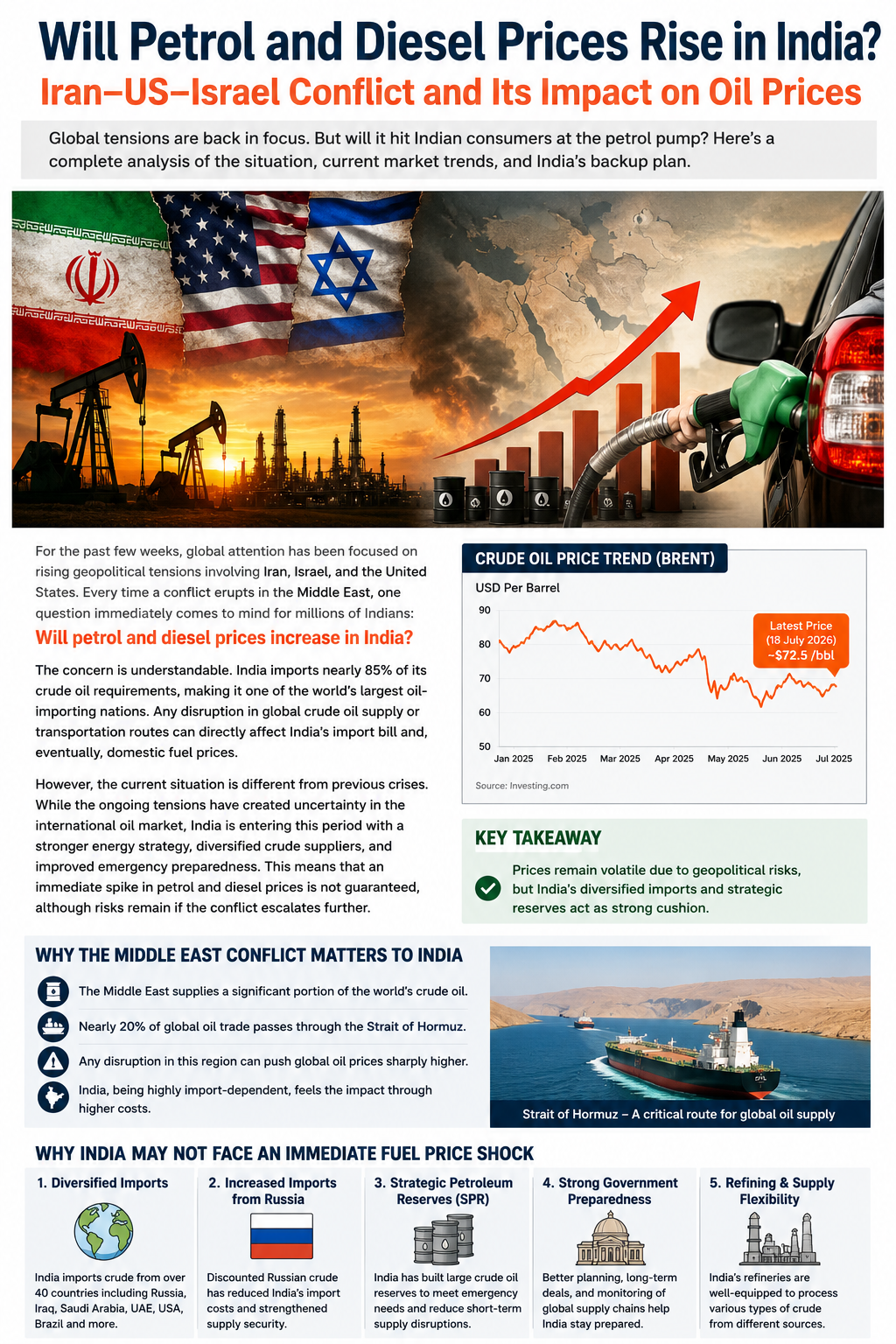
Will Petrol and Diesel Prices Rise in India? This is the biggest question on the minds of millions of Indians as geopolitical tensions between Iran, Israel, and the United States continue to impact global oil markets. Since India imports a large portion of its crude oil, any disruption in supply could influence fuel prices. However, India’s diversified oil imports and strategic energy planning may help reduce the immediate impact on petrol and diesel prices.
Table of Contents
ToggleWill Petrol and Diesel Prices Rise in India?
Will Petrol and Diesel Prices Rise in India? Although India imports nearly 85% of its crude oil, an immediate fuel price hike is not certain. Unlike previous crises, India now has diversified oil suppliers, strategic petroleum reserves, and stronger energy security measures that can help reduce the impact of global supply disruptions. However, if the Iran-Israel-US conflict escalates further, prolonged pressure on crude oil prices could eventually affect petrol and diesel prices in India.
Why the Middle East Conflict Matters to India
Will petrol and diesel prices increase in India? The answer largely depends on developments in the Middle East, which produces a major share of the world’s crude oil. Any escalation in the region or disruption to the Strait of Hormuz—a key global oil shipping route—can drive crude oil prices higher. Since India imports a significant portion of its oil through this route, any prolonged disruption could increase import costs and eventually put pressure on petrol and diesel prices.
Why India May Not Face an Immediate Fuel Price Shock
1. Diversified Crude Oil Imports
Although global tensions have increased, India is in a much stronger position compared to previous oil crises.
Unlike a decade ago, India no longer depends heavily on a single region for crude oil imports.
Today, India purchases crude oil from several countries, including:
- Russia
- Iraq
- Saudi Arabia
- United Arab Emirates
- United States
- Brazil
- West African nations
This diversification reduces the risk of severe supply disruptions if one region becomes unstable.
2. Increased Imports from Russia
Over the past few years, Russia has become one of India’s largest crude oil suppliers.
Will Petrol and Diesel Prices Rise in India? Discounted Russian crude has helped Indian refiners reduce costs and maintain stable fuel supplies despite volatility in global markets. While geopolitical developments continue to influence prices, India’s access to multiple suppliers provides greater flexibility.
3. Strategic Petroleum Reserves
India has also invested in Strategic Petroleum Reserves (SPR), which function as emergency crude oil storage facilities. Will Petrol and Diesel Prices Rise in India?
These reserves are designed to provide temporary protection if global supply chains are disrupted. Although they cannot replace long-term imports, they give policymakers valuable time to respond during emergencies without immediately affecting domestic fuel availability.
4. Stronger Government Preparedness
In recent years, the Indian government has focused on strengthening energy security through diversified sourcing, improved storage infrastructure, and long-term supply agreements.
These measures help reduce the immediate impact of international geopolitical events on India’s domestic fuel market.
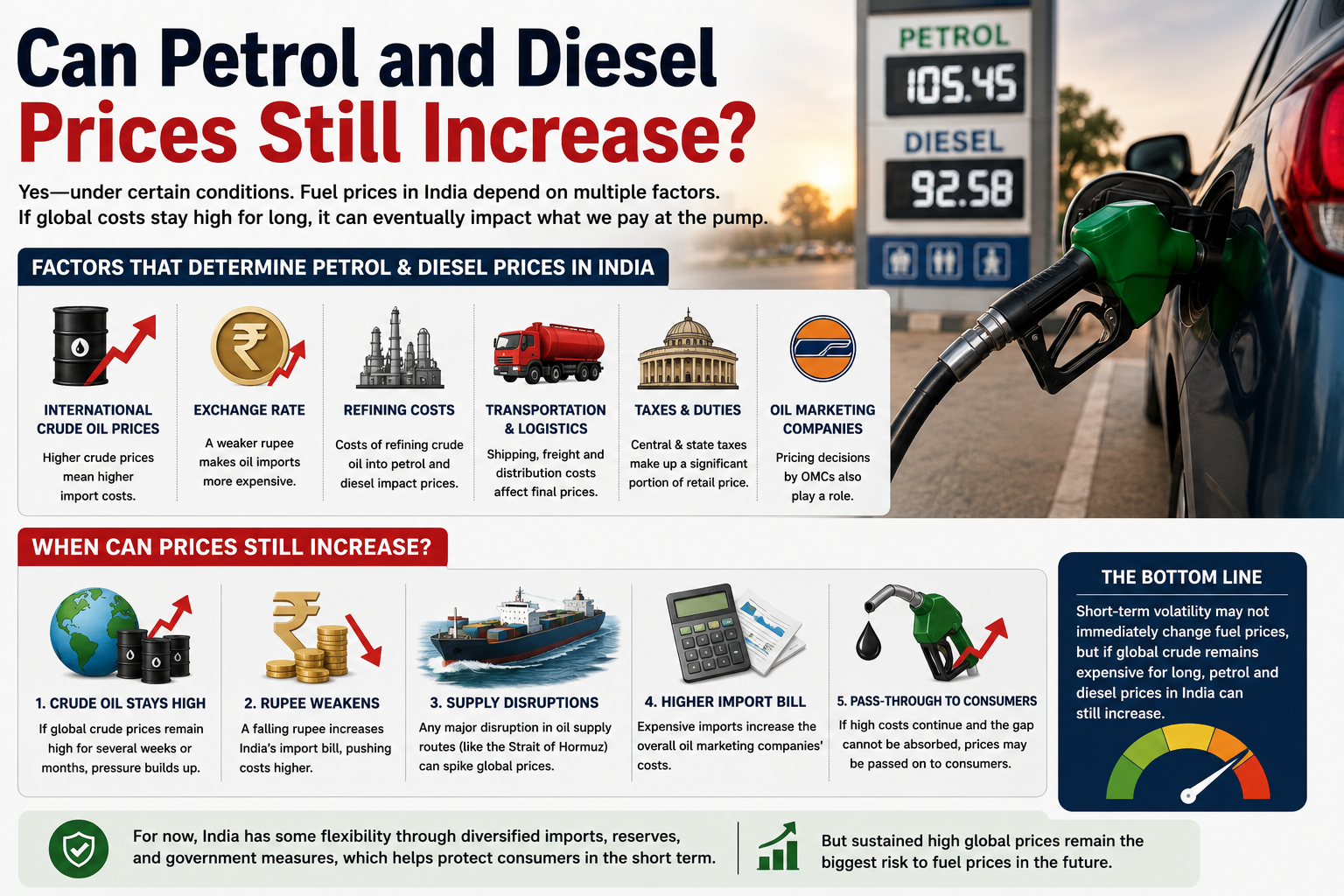
Can Petrol and Diesel Prices Still Increase? Will Petrol and Diesel Prices Rise in India?
Yes—but only under certain conditions.
Petrol and diesel prices in India depend on multiple factors, including:
- International crude oil prices
- Exchange rate between the Indian Rupee and the US Dollar
- Refining costs
- Transportation expenses
- Government taxes and duties
- Marketing decisions by oil companies
If crude oil remains elevated for only a few days, Indian consumers may not notice any significant change.
However, if international prices remain high for several weeks or months, Indian oil companies could eventually pass on part of the increased costs to consumers
Three Possible Scenarios
Scenario 1: Conflict De-escalates
Will Petrol and Diesel Prices Rise in India? If diplomatic negotiations succeed and military tensions reduce, global crude oil prices are likely to stabilize.
In this situation:
- Brent crude prices may soften.
- India’s import costs remain manageable.
- Petrol and diesel prices are likely to stay largely unchanged.
This is the most positive outcome for both consumers and the Indian economy.
Scenario 2: Conflict Continues Without Major Supply Disruption
This is currently considered the most realistic possibility.
Under this scenario:
- Oil prices remain volatile.
- Global markets react to every new development.
- India continues receiving crude oil from multiple suppliers.
- Domestic fuel prices remain relatively stable, although pressure slowly builds if higher crude prices persist.
Scenario 3: Major Supply Disruption
If shipping through the Strait of Hormuz is significantly disrupted or oil production in the region is affected, the consequences could be much more serious.
Possible impacts include:
- Sharp increase in global crude oil prices.
- Higher transportation and logistics costs.
- Increased inflation.
- Pressure on the Indian Rupee.
- Higher import bills.
- Possible increase in petrol and diesel prices if elevated costs continue.
This remains the highest-risk scenario but is not currently the base case.
India's Backup Plan: Is It Enough?
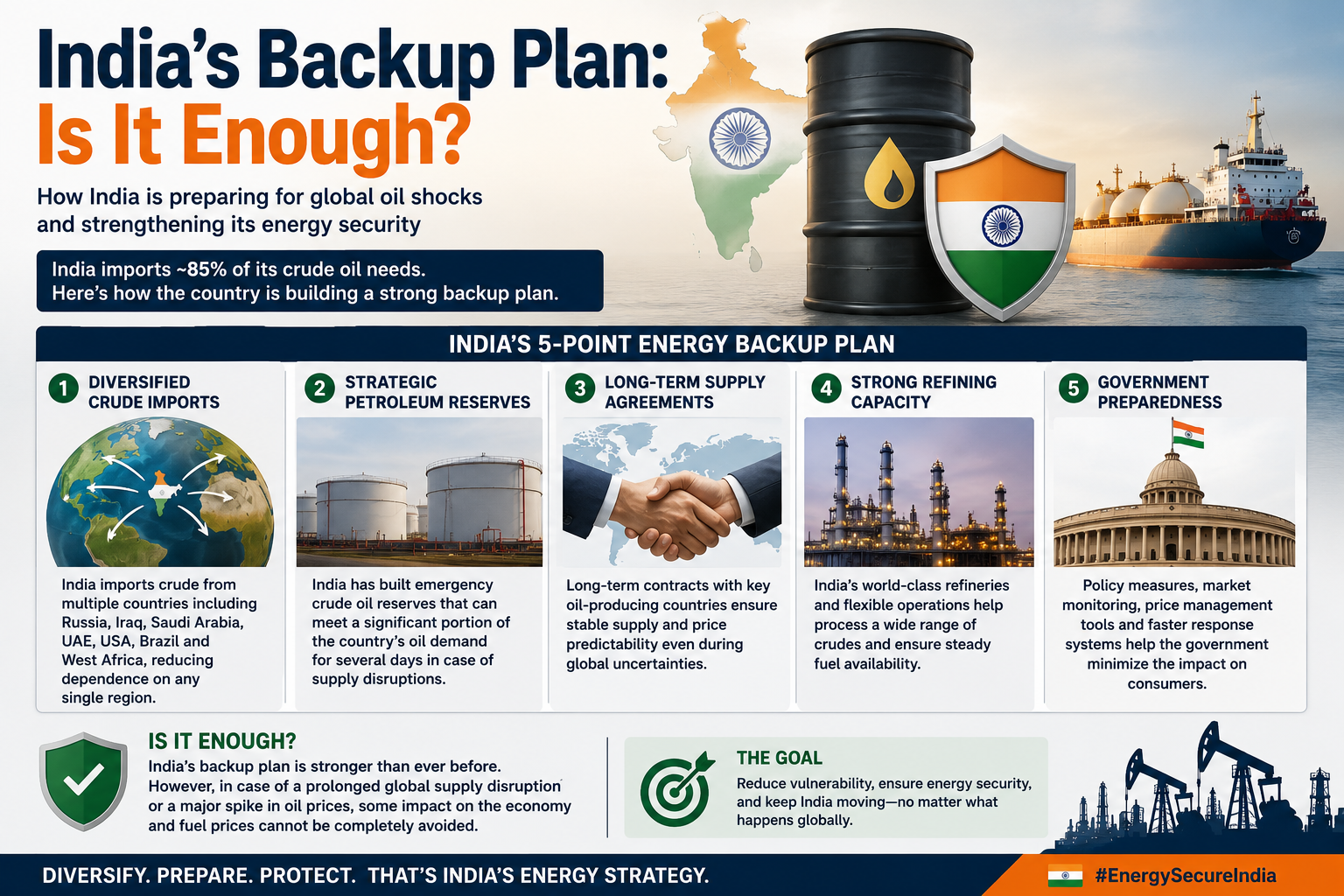
Many experts believe India is better prepared than it was during previous global oil crises.
The country’s energy security strategy now includes:
- Diversified import sources.
- Strategic petroleum reserves.
- Long-term crude supply agreements.
- Flexible refining capabilities.
- Increased monitoring of international supply chains.
These measures cannot completely eliminate the impact of global oil price shocks, but they significantly reduce the chances of an immediate fuel crisis.
What Should Consumers Expect?
For now, Indian consumers do not need to panic. Although geopolitical tensions often raise concerns about fuel prices, Will petrol and diesel prices increase in India? largely depends on global crude oil prices, government policies, and oil companies’ pricing decisions. Experts believe India has sufficient measures to manage short-term market volatility, but if the conflict escalates significantly or disrupts global oil supplies, fuel prices could come under pressure.
Conclusion
The ongoing Iran-US-Israel tensions continue to create uncertainty in global energy markets, but India is better prepared with diversified crude oil imports and a stronger energy security strategy. Will petrol and diesel prices increase in India? While an immediate fuel price hike appears unlikely, the answer will depend on how the conflict unfolds, global crude oil prices, and the stability of key shipping routes. For now, India’s diversified oil sourcing and strategic planning provide a strong buffer against short-term disruptions.